
When a footbridge collapsed in a small district outside Yogyakarta earlier this year, the first report did not come from a national broadcaster or a metro daily. It came from a two-person community news page with 40,000 followers, posted within twelve minutes, complete with photos, a voice note from a resident, and a pinned comment listing which roads to avoid. By the time national outlets picked the story up that evening, the local page had already coordinated donations for the affected families.
That scene captures one of the most important media shifts of 2026: the rise of hyperlocal berita — news built for a specific neighborhood, district, or small city, produced by people who actually live there. While headlines about the news industry tend to focus on artificial intelligence, creator-led channels, and the battle for national audiences, a quieter revolution has been unfolding at street level. And it may be doing more to rebuild trust in journalism than any technology or platform policy.
What Exactly Is Hyperlocal Berita?
Hyperlocal berita refers to journalism that covers a tightly defined geographic area — sometimes a single kelurahan or barangay, sometimes a regency or a mid-sized town. Instead of chasing national politics or celebrity news, these outlets focus on the information people need to navigate daily life:
- Road closures, flooding, and public transport disruptions
- Local market prices, job openings, and small business news
- School announcements, health clinics, and village administration
- Neighborhood safety, petty crime, and community events
- Local elections, budget decisions, and public projects
The concept is not new. Town newspapers and community radio served this role for decades. What has changed is the delivery system and the economics — and, crucially, the speed.
Why Hyperlocal Berita Is Booming in 2026
Several forces converged to make this the breakout year for neighborhood-scale news.
Trust Lives Closer to Home
Surveys across Southeast Asia over the past two years have told a consistent story: trust in large national media brands has plateaued, while trust in local information sources keeps climbing. The reason is simple. People can verify local news with their own eyes. If a page reports that the bridge near the market is closed, readers find out within the hour whether that is true. Accuracy is not an abstract promise — it is a daily test these outlets either pass or fail.
The Infrastructure Finally Caught Up
Cheap mobile data, near-universal smartphone adoption, and the dominance of messaging apps mean a district-level publisher can reach tens of thousands of residents without printing a single page. Community groups on WhatsApp and Telegram now function as de facto front pages, and forward-friendly formats — short text updates, infographics, one-minute videos — spread through family and neighborhood chats faster than any homepage ever could.
Big Media Left a Vacuum
As regional newspapers downsized through the early 2020s, entire districts lost their only professional news coverage. Hyperlocal startups and community pages stepped into that gap, often founded by journalists who had been laid off from those very papers. They brought newsroom discipline to a space previously occupied only by rumor-heavy social groups.
Language Is a Competitive Advantage
Many hyperlocal outlets publish in regional languages or in the informal register people actually speak — Javanese, Sundanese, Cebuano, Kelantanese Malay — rather than formal national language. That choice signals something powerful to readers: this news is for us, made by people like us.
Inside a Hyperlocal Newsroom
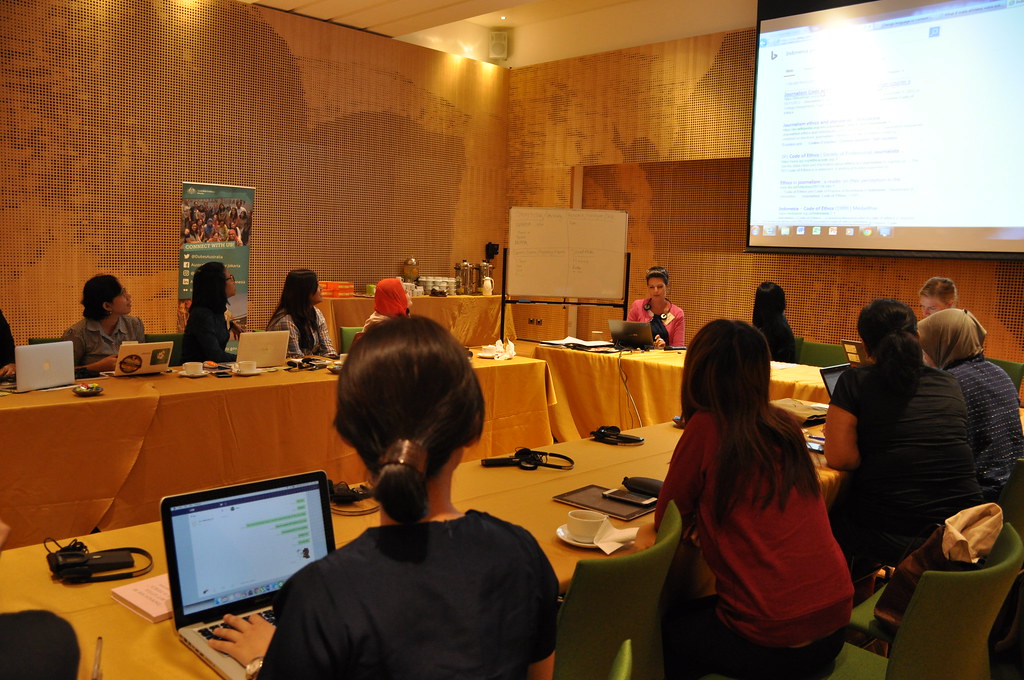
The typical hyperlocal operation in 2026 looks nothing like a traditional newsroom. A common setup involves a small core team of two to five people handling editing, verification, and business operations, supported by a loose network of community correspondents — shopkeepers, teachers, motorcycle taxi drivers, students — who send in tips, photos, and short reports, often for small per-story payments or revenue shares.
Verification works differently here, too. Instead of calling a national spokesperson, an editor calls the village head they have known for years, or cross-checks a flood report with three residents on different streets. The sources are not names in a database; they are neighbors. That intimacy creates both speed and accountability, because a wrong story has immediate social consequences for the person who published it.
Publishing rhythms follow community life rather than a 24-hour news cycle. Many outlets post a morning briefing before residents commute, updates through the day only when something genuinely matters, and a wrap-up in the early evening. Readers frequently describe the experience as a neighbor keeping them informed — which is exactly the point.
The Business Model That Actually Works
Perhaps the most surprising part of the hyperlocal boom is that many of these outlets are financially stable — something national newsrooms with far larger audiences struggle to claim. Their revenue mixes look different from anything in traditional media:
- Local advertising: Restaurants, clinics, tuition centers, and repair shops pay modest rates to reach exactly the customers who can walk through their doors.
- Community classifieds: Job posts, property listings, and lost-and-found notices generate steady, small-ticket income.
- Memberships: Residents pay small monthly amounts — often less than the price of a coffee — not for exclusive content, but to keep a useful service alive.
- Events and services: Some outlets run local job fairs, market days, or media training for small businesses.
The key insight is that hyperlocal berita sells usefulness, not attention. A national publisher monetizes page views at scale; a hyperlocal one monetizes relevance to a few thousand people who genuinely depend on it.
The Civic Impact Nobody Predicted
Local researchers and NGOs have started documenting effects that go well beyond information. Districts with active hyperlocal coverage have seen measurably higher turnout in village elections, faster government responses to infrastructure complaints, and — in several documented cases in 2025 and 2026 — the cancellation of opaque procurement deals after local pages published budget documents and asked simple questions.
There is also a quieter cultural effect. Hyperlocal outlets tend to cover community wins alongside problems: a repaired road, a successful harvest festival, a student who earned a scholarship. That balance counters the negativity bias that dominates national feeds and gives residents a stake in their shared story.
The Challenges Are Real
The hyperlocal model is not a fairy tale. Anyone can claim to be a community news page, and some are little more than rumor mills or vehicles for local political interests. Quality outlets distinguish themselves through transparent sourcing, visible corrections, and clear separation between news and advertising — and readers are getting better at spotting the difference.
Funding remains fragile. A single advertiser dispute can hurt a two-person team, and correspondent safety is a genuine concern when reporting touches local power brokers. Press freedom groups have begun extending legal support and safety training to hyperlocal journalists, recognizing that the front lines of accountability journalism have moved to the district level.
How to Find and Support Quality Hyperlocal Berita
If you want better local news in your own feed, a few habits go a long way:
- Search for your district or neighborhood name on major social platforms and messaging apps, then check how long an outlet has been active and whether it corrects its mistakes.
- Look for named editors and real contact information — accountability starts with a byline.
- Share useful local stories in your community groups; distribution is the most valuable thing a reader can contribute.
- If an outlet offers membership or accepts small contributions, consider paying. Local journalism survives on many small commitments, not a few big ones.
What Comes Next
The next phase is already visible. AI translation tools are helping outlets publish across multiple local languages without large staffs. Regional networks are emerging, letting hyperlocal publishers share technology, training, and even investigative resources while keeping editorial control local. And a handful of governments and foundations have begun experimenting with public-interest funding for district-level journalism — a policy debate worth watching through 2027.
National news will always matter. But in 2026, the most consequential story in media is arguably the smallest one: neighbors telling neighbors what is happening on their street, and building the kind of trust that no algorithm can manufacture.